Home / Blog / Distilled Water for Car Batteries and Cooling Systems: Why Mineral-Free Matters Before Winter
Guides
Distilled Water for Car Batteries and Cooling Systems: Why Mineral-Free Matters Before Winter
Taj Water Team · · 7 min read
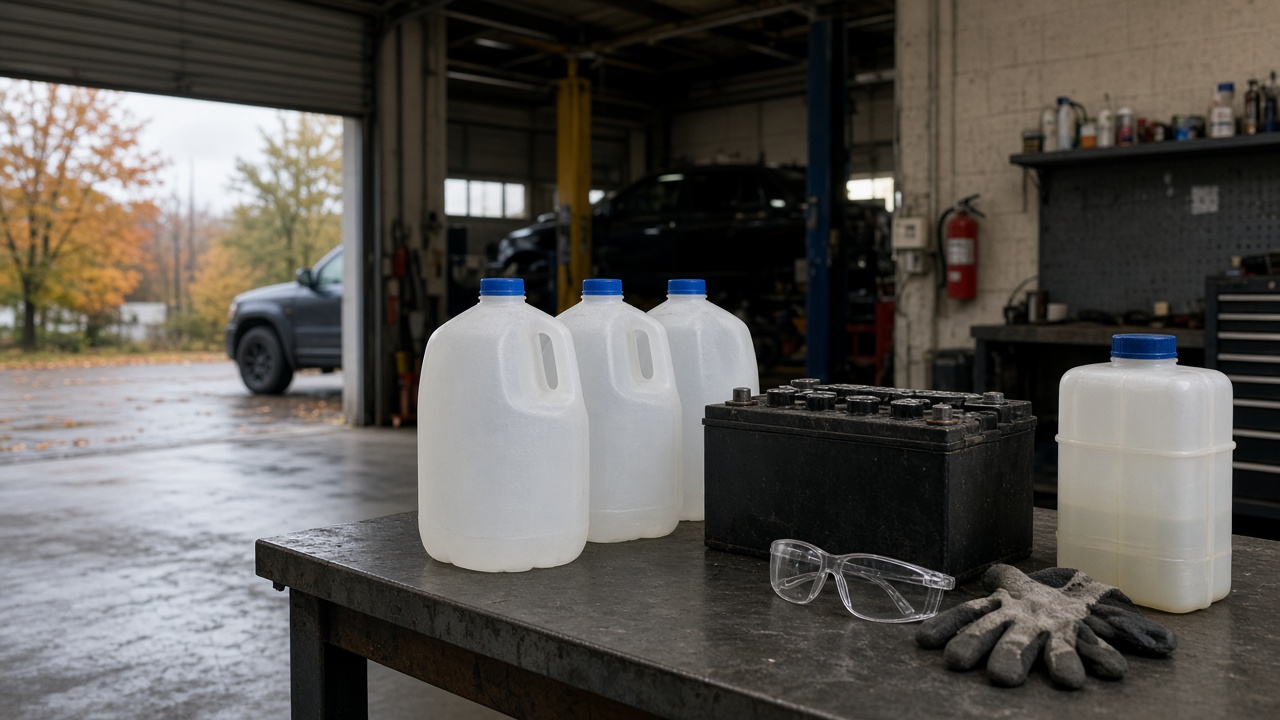
Why mechanics, fleets and DIYers use distilled water to top up flooded batteries and mix coolant. 5-gallon distilled jugs delivered in the Lower Mainland.
The first frosty mornings in the Fraser Valley have a way of finding the one vehicle in the lot with a tired battery. Fall is the right time to get ahead of it, and a lot of that prep comes down to something simple: the water you put into your battery and your cooling system.
Whether you run a fleet, a repair shop or just a well-kept home garage, here is why mechanics reach for distilled water for these two jobs, where it belongs, and how to keep enough on hand without weekly store runs.
Why minerals are the problem
This isn't about drinking water quality. The issue for vehicles is what's dissolved in the water. Even soft water carries small amounts of minerals like calcium and magnesium, plus whatever the pipes add on the way to your tap.
Inside a battery or a radiator, they have nowhere to go. Water evaporates or gets used up, the minerals stay behind, and over months they build up as scale and deposits. That's why the trade standard for topping up and mixing is water with the minerals taken out.
Distilled water is made by turning water into vapour and condensing it back, which leaves the dissolved minerals behind. Our 5-gallon distilled water is produced through a filtration and distillation process for exactly these kinds of mineral-sensitive jobs.
Distilled water for flooded lead-acid batteries
Which batteries actually need topping up
Not every battery is meant to be opened. Many newer car batteries are sealed or "maintenance-free," and AGM batteries are sealed by design. If there are no removable caps on top, leave it closed and follow the manufacturer's guidance.
The batteries that do need regular top-ups are flooded (wet-cell) lead-acid types. You'll find them in:
- Older cars and trucks, and some heavy-duty work vehicles
- Forklifts and other electric warehouse equipment
- Golf carts and utility carts
- RV, boat and deep-cycle house batteries
- Standby and backup power banks for shops and facilities
Why distilled, not tap
When a flooded battery charges, some of the water in the electrolyte breaks down and escapes as gas. The acid stays. So when the level drops, you replace water only, and that water needs to be clean.
Minerals from tap water can coat the plates and settle in the cells, which works against the chemistry the battery depends on. Topping up with distilled water keeps you from adding anything the battery doesn't need. Many battery makers specify distilled or deionized water for this reason, so check the label or manual for yours.
A safer top-up routine
A few habits make battery maintenance easier and safer:
- Gear up first. Battery acid is corrosive. Wear safety glasses and gloves, and work in a well-ventilated space away from sparks or flame.
- Check the level, don't guess. Each cell should cover the plates. Most batteries have a fill indicator or a split ring inside the opening.
- Top up after charging when you can. The electrolyte expands while charging, so filling to the top beforehand can lead to overflow. If the plates are exposed, add just enough distilled water to cover them, charge, then top up to the correct level.
- Add water only. Never add acid or anything else unless a battery professional tells you to.
- Don't overfill. Stop at the indicator. Overfilled cells can spill acid when charging.
- Keep a jug nearby. For forklifts and fleet carts on a weekly check, a dedicated distilled jug in the charging area makes it easy for staff to do it right.
Distilled water for cooling systems
What coolant is mixed with
Engine coolant comes two ways: pre-mixed and ready to pour, or as a concentrate you dilute with water. If you buy concentrate, the water you mix it with matters. Coolant contains additives that help protect the metals and seals in your cooling system. Hard minerals can react with those additives and leave scale in the radiator, heater core and passages, which makes it harder for the system to shed heat.
That's why so many coolant labels and owner's manuals call for distilled or deionized water. Follow the mixing ratio printed on your coolant and in your vehicle's manual. Different coolants and climates call for different ratios, and the label is the right source.
Where distilled water comes in handy
- Mixing concentrate for a flush and refill, or for topping up a low reservoir
- Flushing a system before adding fresh coolant, when your service procedure calls for it
- Equipment beyond cars: generators, compressors and other machinery with liquid cooling loops often have the same mineral-free recommendation
A quick safety note: never open a radiator cap or pressurized reservoir on a hot engine. Let it cool fully first.
Distilled vs purified: which jug goes where
We deliver both 5-gallon purified and 5-gallon distilled water, and they have different jobs.
- Purified water is our everyday drinking water for homes and offices. It goes in the water cooler in the break room.
- Distilled water is for appliances, batteries, cooling systems and other equipment where minerals cause buildup. It's not necessary for everyday drinking, so keep it in the shop, not the staff room.
Plenty of garages and fleet yards order both on the same delivery: purified for the crew, distilled for the bays. Label the jugs clearly so nobody mixes them up.
How much distilled water should a shop keep?
It depends on how many batteries you maintain and how often you mix coolant. A few rules of thumb:
- Home garage or one or two vehicles: a single 5-gallon jug usually lasts a long time. Keep it capped and stored out of direct sun.
- Small repair shop or detailing business: a few jugs on a regular schedule means you never pause a job to run to the store.
- Fleet yard, forklift operation or dealership service department: set a weekly or bi-weekly delivery and match it to your maintenance calendar. If you're going through large volumes, a bulk water tote may be easier than stacks of jugs. Our totes vs jugs comparison walks through when each makes sense.
Our jug schedules are weekly, bi-weekly or monthly with no contracts, and you can pause, skip or change anytime. If you're not sure where to start, our guide to how many 5-gallon jugs you need per month is written for drinking water, but the same planning approach works for a shop.
Local delivery for garages and fleets
Taj Water runs its own routes out of Port Coquitlam, so the person bringing your jugs is part of our team, not a third-party courier. We swap empties for full jugs on each visit, and the reusable jugs mean less plastic going into the bin.
We deliver to shops, fleets and homes across 14 Lower Mainland communities, including Port Coquitlam, Surrey, Delta, Langley and Maple Ridge. Delivery is usually within the week, and next-day slots are often available in most areas. Give us a call to confirm timing for your address.
FAQ
Can I use bottled drinking water instead of distilled in my battery?
Drinking water, including purified water, is made for drinking, not specifically to be mineral-free for equipment. For batteries and coolant, most manufacturers point to distilled or deionized water. When in doubt, follow the label or manual.
Do sealed or maintenance-free batteries need distilled water?
No. Sealed and AGM batteries are not designed to be opened or topped up. Distilled water is for flooded lead-acid batteries with removable cell caps.
Is distilled water the same as deionized water?
They're made differently. Distillation boils and condenses water, while deionization uses resins to pull out charged minerals. Both remove most dissolved minerals, and many manufacturers list either one as acceptable. We supply 5-gallon distilled jugs, and for purity-critical work we offer ultra-purified water by quote.
How should I store distilled water in a shop?
Keep jugs capped, off the floor and out of direct sun, and away from chemicals and fuel. Use a clean funnel or pump so nothing gets into the jug.
Can I order distilled and purified water together?
Yes. Lots of businesses add distilled jugs to their regular drinking water delivery. Choose what you need on our products page, or check the FAQ for more on how delivery works.
Get ahead of winter
A jug of distilled water on the shelf is one of the simplest ways to keep batteries and cooling systems in good shape through the cold months. Order 5-gallon distilled water, or contact us for a free quote on bulk totes for your fleet or shop. Prefer to talk it through? Call us at (778) 504-7880. We're open every day, and you'll get a real person on the line.